
As a professional photographer, having the right equipment is crucial to achieving your creative vision and delivering high-quality work. Whether you specialize in portraits, landscapes, weddings, or commercial photography, certain tools are indispensable. Here’s a guide to the essential gear every professional photographer should have in their arsenal:
Camera Body and Lenses
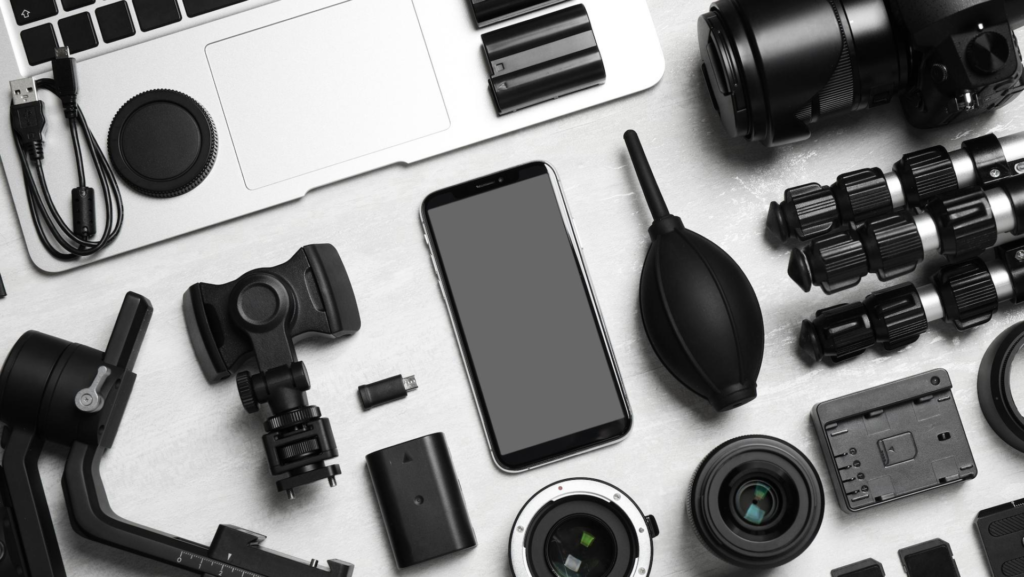
The cornerstone of any photographer’s kit is a reliable camera body and a selection of lenses. Invest in a camera that suits your photography style and provides the image quality and features you need. Full-frame DSLRs and mirrorless cameras are popular choices for their versatility and excellent image sensors. Pair your camera body with a variety of lenses: a fast prime lens for portraits or low-light situations, a wide-angle lens for landscapes, and a telephoto lens for capturing distant subjects or events, and specialized lenses like tilt-shift or compact primes if you are an elopement photographer, to ensure you can capture every moment with precision and artistry.
Lighting Equipment
Control over lighting can make or break a photograph. Professional photographers often use a combination of natural light and artificial lighting sources to achieve the desired mood and effect. Essential lighting gear includes portable flash units or strobes, light modifiers such as umbrellas or softboxes for diffusing harsh light, reflectors for bouncing light back onto subjects, and continuous lighting for video work or studio setups. Mastering lighting techniques is essential for creating professional-quality images.
Tripod and Camera Support
Stability is key to achieving sharp images, especially in low-light conditions or when using long exposures. A sturdy tripod is indispensable for landscape, architectural, and macro photography, allowing you to compose your shot precisely and avoid camera shashakingonsider a tripod with adjustable legs and a ball head for flexibility. Additionally, invest in a monopod for situations where mobility is crucial but you still need some stability, such as sports or event photography.
Conclusion
In conclusion, while the gear mentioned here forms the backbone of a professional photographer’s toolkit, creativity, skill, and practice are equally important. Understand your equipment thoroughly, experiment with different techniques, and continuously refine your craft. By mastering these essential tools and techniques, you’ll be well-equipped to capture stunning images that resonate with your audience and stand the test of time.